
The Invisible Value of Security Officers
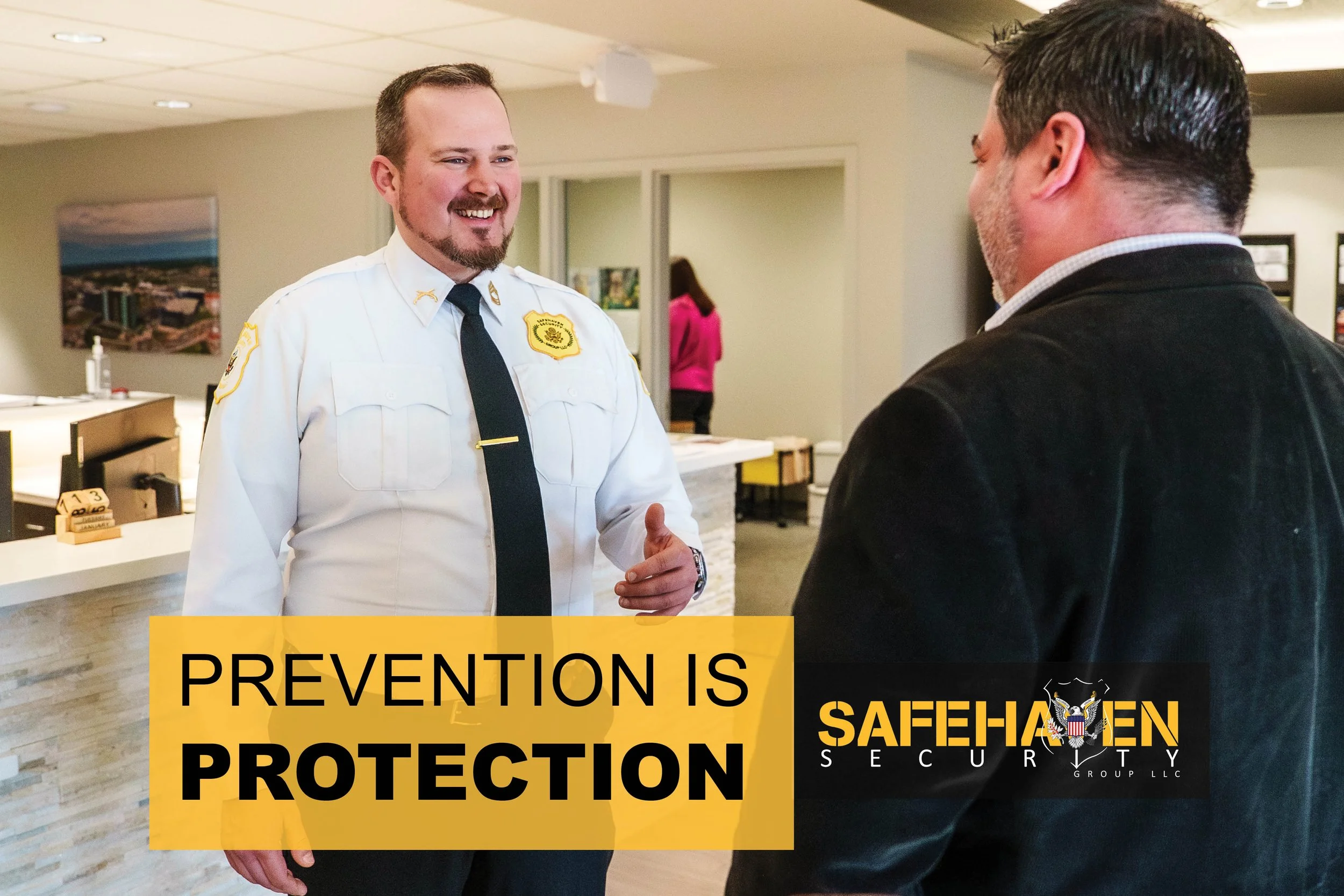
Why the Best Security Work Happens Before Anything Goes Wrong
By Monte Mills
Ask most people what comes to mind when they hear the phrase "security guard," and they'll likely picture someone standing at a door, checking badges, watching cameras, and waiting for something to happen.
That's the problem.
The term itself creates a misconception.
A guard watches.
A Security Officer protects.
Today's professional Security Officers are trained observers, risk managers, de-escalation specialists, emergency responders, and often the first line of defense against threats that never make the evening news. Yet despite the critical role they play, many outdated myths continue to shape how organizations view uniformed security.
Let's separate fact from fiction.
Myth #1: Security Officers Are Just There to Look Tough
A visible presence matters. It deters unwanted behavior and reassures employees, customers, and visitors.
But visibility is only the beginning.
Professional Security Officers are constantly assessing their environment, identifying vulnerabilities, recognizing concerning behaviors, and addressing issues before they become incidents. The most valuable security work is often the work nobody sees.
A conflict is resolved before it becomes violence.
A suspicious person is identified before they gain access.
A safety hazard is corrected before someone gets hurt.
That's not intimidation.
That's prevention.
Myth #2: Anyone Can Become a Security Officer
One of the most damaging assumptions in our industry is that security is unskilled labor.
Professional Security Officers undergo licensing, background screening, training, and continuing education. Many bring military, law enforcement, emergency services, or specialized security experience to the role.
More importantly, they are trusted to make sound decisions under pressure.
Technology provides information. Policies provide guidance. Training provides a framework.
But judgment remains human.
The difference between an average officer and a professional often reveals itself during the worst five minutes of an organization's day.
Myth #3: Security Officers Don't Do Anything Until Something Happens
This myth exists because success in security is often invisible.
Organizations tend to notice incidents. They rarely notice the incidents that never occurred.
Professional Security Officers patrol facilities, monitor behavioral changes, identify vulnerabilities, enforce procedures, and address concerns before they escalate. Much like preventive healthcare, the goal is not simply to respond to emergencies. The goal is to reduce the likelihood that emergencies occur in the first place.
The best security programs aren't measured solely by response.
They're measured by prevention.
Myth #4: Security Officers Have No Real Authority
The old "rent-a-cop" stereotype continues to persist, despite being wildly inaccurate.
While Security Officers are not law enforcement officers, they possess significant responsibilities and authority within the environments they protect. They control access, enforce property rules, address trespassing concerns, document incidents, support investigations, and serve as first responders during emergencies.
Professional officers understand both their authority and their limitations.
The objective isn't to act like police.
The objective is to protect people, property, and operations while operating within legal and ethical boundaries.
Myth #5: Technology Will Replace Security Officers
Cameras, access control systems, artificial intelligence, and remote monitoring have transformed security.
They have not replaced people.
Technology can detect movement, trigger alarms, and generate alerts. It cannot interpret human behavior, de-escalate conflict, comfort a distressed employee, or make judgment calls in rapidly changing situations.
Technology detects.
People decide.
The strongest security programs combine both. Technology expands awareness. Security Officers provide the judgment, communication, and response that technology cannot.
Myth #6: Security Officers Are Only Needed in High-Risk Environments
Many organizations mistakenly believe security is reserved for banks, casinos, or facilities located in high-crime areas.
The reality is different.
Healthcare systems face workplace violence concerns. Corporate campuses deal with insider threats. Schools focus on safety and behavioral intervention. Manufacturing facilities confront theft, sabotage, and access-control challenges.
Security is not about where you are today.
It's about preparing for what could happen tomorrow.
Strong organizations don't wait for a crisis before taking preparedness seriously.
Myth #7: The Best Security Officers Are the Biggest and Most Intimidating
Physical presence has value.
Communication has more.
The most effective Security Officers are often those who remain calm under pressure, communicate clearly, recognize emotional escalation, and know how to de-escalate tension before force ever becomes necessary.
Most incidents are resolved through awareness, professionalism, empathy, and communication.
Not physical confrontation.
The ability to calm a situation will always be more valuable than the ability to dominate one.
The Reality Leaders Need to Understand
Security is not about fear.
It is not about preparing for unlikely scenarios.
And it certainly isn't about standing around waiting for trouble.
At its core, professional security is risk management. It is resilience. It is preparedness.
Security Officers create environments where employees can focus on work, customers can focus on business, and organizations can focus on growth because someone is actively protecting the conditions that make success possible.
Throughout my military career and years leading protective operations, I've learned a simple truth:
The best Security Officers are rarely measured by the incidents they respond to.
They are measured by the incidents they prevent.
The door that never gets breached.
The conflict that never becomes violence.
The employee who gets home safely.
The threat that never has a chance to mature.
That's the work of a professional Security Officer.
It's often invisible.
But its impact is felt every day.
Organizations that understand this stop buying hours.
They start investing in protection.