Executive Protection for Business Leaders: When and Why It’s Necessary
Executive protection (EP) has evolved far beyond the stereotype of dark suits and earpieces. For today’s business leaders—especially those in high-visibility, high-impact roles—EP is a strategic investment in organizational stability, not a personal luxury. As threats become more complex and leadership becomes more public, companies are rethinking how they safeguard the individuals who drive their mission, reputation, and shareholder value.
4 Reasons Why Executive Protection Has Become a Business Imperative:
1. Leaders Are More Exposed Than Ever
Modern executives operate in an environment where visibility is constant and unavoidable. Earnings calls, media interviews, social platforms, and public appearances create a digital and physical footprint that adversaries can exploit. Healthcare, technology, energy, and financial services leaders face especially high levels of hostility due to industry controversies, regulatory pressures, or public sentiment.
2. Threats Are Broader, Faster, and Less Predictable
Threats today rarely come from a single direction. They include:
Targeted harassment and stalking
Doxxing and online intimidation
Protests or activist disruptions
Workplace violence spillover
Domestic extremism
Cyber-enabled threats that escalate into physical risk
The convergence of digital and physical risk means a threat can materialize in minutes or hours, not weeks. Social media and online forums allow disgruntled individuals to single out corporate figures and rally others.
Executives today face coordinated campaigns blending digital harassment (e.g. doxxing personal details, deepfake smear videos) with physical intimidation. For example, angry stakeholders or ideologically driven actors might publish a CEO’s home address or schedule, encouraging confrontations.
Climate protesters trespassed at Woodside Energy CEO Meg O’Neill’s home in 2023 – an act she said was “designed to threaten me, my partner and our daughter in our home,” not a harmless protest. This incident forced her company to confront how to safeguard leaders’ families from activist aggression.
3. Business Continuity Depends on Leadership Stability
Executives are not just individuals—they are critical business assets. A single incident involving a CEO or senior leader can trigger:
Stock volatility
Loss of investor confidence
Operational disruption
Reputational damage
Regulatory scrutiny
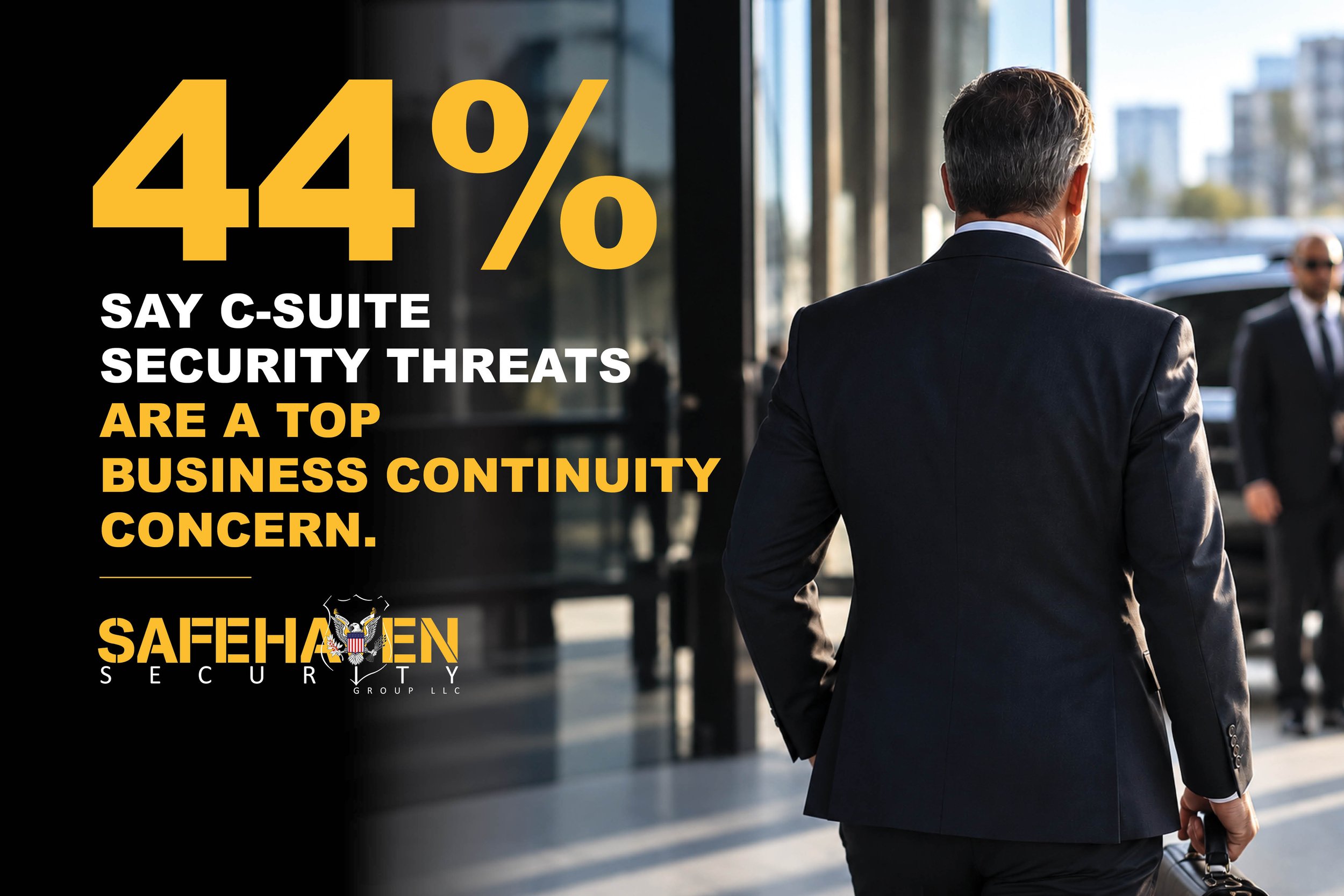
EP programs ensure that leadership remains protected, mobile, and able to operate without interruption. A 2025 Allied Universal–G4S World Security Report found that nearly half (44%) of legal and compliance officers cited physical security threats to the C-suite and company leadership as a top concern for business continuity.
The sudden loss or incapacitation of a CEO can devastate a company’s stock and operations, so spending on prevention (security) is arguably in shareholders’ best interests.
4. Boards Now View Protection as a Fiduciary Responsibility
In the wake of high-profile attacks on corporate leaders, boards increasingly recognize that failing to protect executives exposes the company to legal, financial, and reputational risk. Many S&P 500 companies now disclose security spending as part of executive compensation, reflecting its strategic importance.
The IRS allows certain security costs to be treated as non-taxable “working condition fringe” benefits – essentially business expenses.
Companies often hire independent security consultants to evaluate threats and recommend protections. When such a program exists, a large share of personal security costs can be excluded from the executive’s taxable income.
When Executive Protection Becomes Necessary
Executive protection is not one-size-fits-all. It becomes essential when specific conditions elevate risk beyond what traditional corporate security can manage.
1. High-Visibility Roles
CEOs, COOs, CFOs, chief medical officers, and public-facing leaders often require protection due to:
Media exposure
Controversial decisions
Regulatory interactions
Public speaking engagements
Healthcare executives, in particular, face heightened risk due to emotionally charged environments and patient-related grievances.
2. Organizational Change or Crisis
Risk spikes during:
Layoffs or restructuring
Mergers and acquisitions
Labor disputes
Major litigation
Product recalls
Public scandals
These moments create emotional volatility and increase the likelihood of targeted aggression.
3. Travel to Higher-Risk Locations
International travel introduces variables such as:
Political instability
Kidnapping risk
Surveillance
Unfamiliar environments
Medical emergencies
Even domestic travel can pose risk when executives attend high-profile events or visit facilities with known tensions.
4. Personal Circumstances That Increase Vulnerability
Executives may require protection when:
They or their families experience stalking or harassment
Their home address becomes public
They receive credible threats
They are involved in contentious legal or public matters
Family protection is increasingly common, especially for leaders in healthcare, tech, and public policy sectors.
What an Effective Executive Protection Program Includes
A modern EP program is proactive, intelligence-driven, and tailored to the executive’s lifestyle and risk profile. Core components include:
Threat intelligence and monitoring
Residential security assessments
Secure travel planning and advance work
Driver and transportation security
Event and venue risk assessments
Digital footprint reduction
Emergency response planning
Family safety protocols
The Bottom Line
Threats against senior corporate leaders escalated sharply during the past year, with incident levels reaching their highest point on record in 2025, according to new research from the Security Executive Council (SEC). The study, Executive Targeting Report: Analysis of Attacks on Corporate Executives from 2003-2025, documents 424 open source reported incidents worldwide. By the end of October 2025, incident volume had doubled from 2024 levels.
Executive protection is no longer optional for organizations with high-profile leaders or elevated risk environments. It is a strategic safeguard that protects people, preserves business continuity, and reinforces organizational resilience.